Mirza Ghalib Shayari: 20 Best Couplets in Urdu with Meaning
Mirza Ghalib shayari in Urdu with transliteration and English meaning. Read 20 best Ghalib couplets plus Faiz, Faraz, Parveen Shakir, and Rahat Indori.
Mirza Ghalib is the most quoted poet in Urdu literature. His couplets capture love, loss, desire, and the absurdity of existence in two lines. This collection brings together 20 of his best shayari in original Urdu, with transliteration and short English meanings. Updated 2026.
Related reading: Discover our full guide on Best Bewafa Poetry in Urdu: 20 Heartfelt Couplets (2026).
According to Rekhta, Ghalib is one of the most quotable poets, having couplets for almost all situations of life. rekhta.org
"Ghalib didn't just write ghazals. He reinvented the form."
Editors at Poetry Explainer
Mirza Ghalib Shayari: 20 Best Couplets in Urdu
Here are 20 of Ghalib's most quoted couplets, each with the original Urdu text, a simple transliteration, and a short English meaning.
| No. | Urdu | Transliteration | Meaning |
|---|---|---|---|
| 1 | ہزاروں خواہشیں ایسی کہ ہر خواہش پہ دم نکلے | Hazaron khwahishen aisi ke har khwahish pe dam nikle | A thousand desires, each worth dying for. Many wishes were fulfilled, yet they still felt too few. |
| 2 | محبت میں نہیں ہے فرق جینے اور مرنے کا | Mohabbat mein nahin hai farq jeene aur marne ka | In love there is no difference between living and dying. We live by looking at the one whose sight could kill us. |
| 3 | دلِ ناداں تجھے ہوا کیا ہے | Dil-e-nadan tujhe hua kya hai | O foolish heart, what has happened to you? What is the cure for this pain? |
| 4 | یہ نہ تھی ہماری قسمت کہ وصالِ یار ہوتا | Ye na thi hamari qismat ke visal-e-yar hota | It was not my fate to meet the beloved. Had I lived longer, it would have been more of the same waiting. |
| 5 | ہم کو معلوم ہے جنت کی حقیقت لیکن | Hum ko maloom hai jannat ki haqeeqat lekin | I know the reality of paradise, but to keep the heart happy, this idea is pleasant. |
| 6 | عشق پر زور نہیں، ہے یہ وہ آتش غالب | Ishq par zor nahin, hai ye woh aatish Ghalib | Love cannot be forced. It is a fire that cannot be lit at will, nor extinguished at will. |
| 7 | بازیچۂ اطفال ہے دنیا میرے آگے | Bazicha-e-atfal hai duniya mere aage | The world before me is a children's game. Day and night, a spectacle unfolds before my eyes. |
| 8 | اُن کے دیکھے سے جو آ جاتی ہے منہ پر رونق | Unke dekhe se jo aa jaati hai munh par rooniq | When I see the beloved, my face lights up. They think the patient is getting better. |
| 9 | نہ تھا کچھ تو خدا تھا، کچھ نہ ہوتا تو خدا ہوتا | Na tha kuchh to Khuda tha, kuchh na hota to Khuda hota | When nothing existed, God existed. Existence drowned me; had I not existed, what would it matter? |
| 10 | ہر ایک بات پہ کہتے ہو تم کہ تُو کیا ہے | Har ek baat pe kehte ho tum ke tu kya hai | On every matter you say, what are you? Tell me, what is this way of speaking? |
| 11 | کوئی امید بر نہیں آتی | Koi ummeed bar nahin aati | No hope is fulfilled. No possibility appears in sight. |
| 12 | رنج سے خوگر ہوا انسان تو مٹ جاتا ہے رنج | Ranj se khugar hua insaan to mit jaata hai ranj | When a person becomes used to sorrow, sorrow fades away. So many difficulties fell on me that they became easy. |
| 13 | عشق سے طبیعت نے زیست کا مزا پایا | Ishq se tabiyat ne zist ka maza paya | From love, my nature found the taste of life. I found a cure for pain, but I found a pain without cure. |
| 14 | ابنِ مریم ہوا کرے کوئی | Ibn-e-Maryam hua kare koi | Let someone be like the son of Mary. Let someone cure my sorrow. |
| 15 | موت کا ایک دن معین ہے | Maut ka ek din muayyan hai | Death has one fixed day. Why does sleep not come all night? |
| 16 | ہوئے تم دوست جس کے دشمن اس کا آسماں کیوں ہو | Hue tum dost jis ke dushman us ka aasman kyun ho | You became a friend to one whose enemy is the sky. Whatever can spoil your fate, I will do it. |
| 17 | یہ مسائلِ تصوف، یہ ترا بیان غالب | Ye masail-e-tasawwuf, ye tera bayan Ghalib | These questions of mysticism, this explanation of yours, Ghalib. We would have called you a saint had you not been a wine drinker. |
| 18 | دل ہی تو ہے نہ سنگ و خشت درد سے بھر نہ آئے کیوں | Dil hi to hai na sang-o-khisht dard se bhar na aaye kyun | The heart is not stone or brick, why would it not fill with pain? We will weep a thousand times, why would anyone torment us? |
| 19 | قید میں ہوں تو کیا، غمِ دوراں سے نہ گھبرا | Qaid mein hoon to kya, gham-e-dauraan se na ghabra | What if I am in prison? Do not fear the sorrows of the age. I am even in a place no one has reached. |
| 20 | ہم نے مانا کہ تغافل نہ کرو گے لیکن | Hum ne maana ke taghaful na karoge lekin | I accept that you will not ignore me, but I will turn to dust before you even get the news. |
For the complete collection of Ghalib's works, explore Rekhta.
Explore Ghalib's complete works on Rekhta
Ghalib at a Glance: Key Facts
These key facts come from the biographical notes published by Urdu Nigaar.
| Fact | Detail |
|---|---|
| Born | 1797, Agra |
| Died | 1869, Delhi |
| Started poetry | Age 13 |
| Court appointment | 1850, under Bahadur Shah Zafar |
| Urdu diwan | About 234 ghazals |
Source: urdu-nigaar.com
Other Legendary Poets You Should Read
Beyond Ghalib, four other poets shaped modern Urdu shayari: Faiz Ahmed Faiz, Ahmad Faraz, Parveen Shakir, and Rahat Indori.
| Poet | Era | Signature Theme | Famous Line |
|---|---|---|---|
| Mirza Ghalib | 1797 to 1869 | Philosophy and paradox | Hazaron khwahishen aisi |
| Faiz Ahmed Faiz | 1911 to 1984 | Love and revolution | Mujh se pehli si mohabbat |
| Ahmad Faraz | 1931 to 2008 | Romance and rebellion | Ranjish hi sahi |
| Parveen Shakir | 1952 to 1994 | Feminine voice and love | Tumhare hijr mein |
| Rahat Indori | 1950 to 2020 | Bollywood and wit | Kabhi kisi ko mukammal jahan |
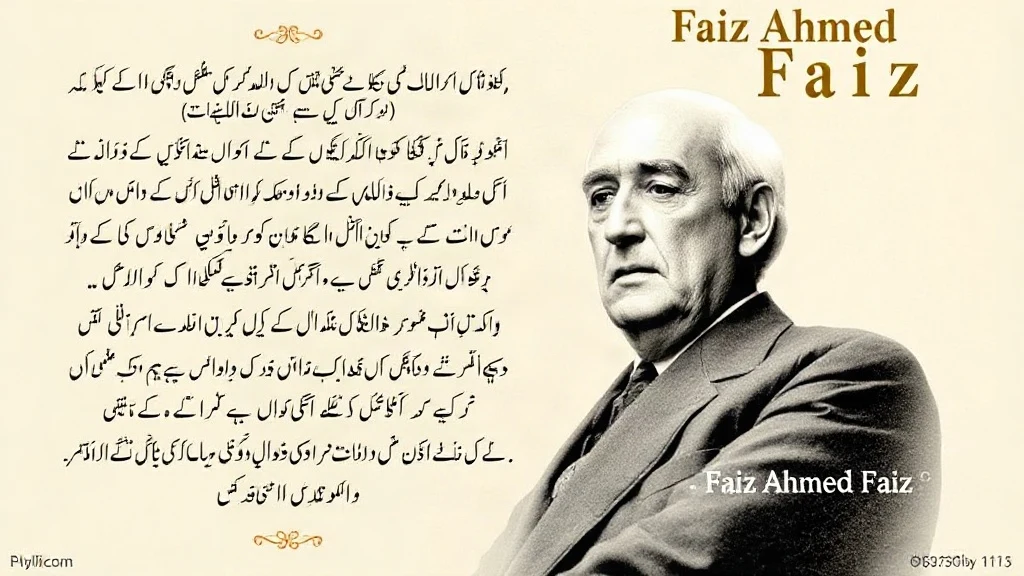
Faiz Ahmed Faiz
Faiz turned love poetry into a voice for revolution. His most quoted line asks his beloved not to demand the old love.
Urdu: مجھ سے پہلی سی محبت میرے محبوب نہ مانگ
Transliteration: Mujh se pehli si mohabbat mere mehboob na maang
Meaning: Do not ask me, my beloved, for the love of earlier days.
Ahmad Faraz
Faraz wrote with equal power about romance and resistance. This couplet is one of his most recited lines.
Urdu: رنجش ہی سہی دل ہی دکھانے کے لیے آ
Transliteration: Ranjish hi sahi dil hi dukhane ke liye aa
Meaning: Even if it is bitterness, come, even if only to break my heart.
Parveen Shakir
Parveen Shakir brought a distinct feminine voice to Urdu ghazal. Her poetry speaks directly about love and loss.
Urdu: تمہارے ہجر میں ہم نے بہت سے درد بنائے
Transliteration: Tumhare hijr mein hum ne bahut se dard banae
Meaning: In your separation, I created many pains.
Rahat Indori
Rahat Indori was a Bollywood lyricist and a master of the modern sher. This line is among his most shared.
Urdu: کبھی کسی کو مکمل جہاں نہیں ملتا
Transliteration: Kabhi kisi ko mukammal jahan nahin milta
Meaning: Sometimes no one gets a perfect world.
Frequently Asked Questions About Mirza Ghalib
What is Mirza Ghalib's most famous shayari?
Hazaron Khwahishen Aisi is his most quoted couplet. It captures the endless nature of human desire in two lines.
How many ghazals did Mirza Ghalib write?
Ghalib's Urdu diwan contains about 234 ghazals. He also wrote a separate diwan in Persian.
What is the meaning of Hazaron Khwahishen Aisi?
The couplet says that a person has a thousand desires, each worth dying for. Even when some wishes are fulfilled, the heart keeps making new demands.
What is the difference between Ghalib and Faiz?
Ghalib wrote about philosophy, love, and the self in the 19th century. Faiz Ahmed Faiz wrote in the 20th century and mixed love with revolution and social justice.
Where can I read Mirza Ghalib's complete works?
Rekhta hosts the largest online collection of Ghalib's Urdu and Persian poetry. You can browse his ghazals and couplets for free.
For more Urdu poetry collections, visit Urdushayaricollection.
Next story

Best Bewafa Poetry in Urdu: 20 Heartfelt Couplets (2026)
Best bewafa poetry in Urdu with 20 original couplets and longer pieces. Each shayari includes Urdu text and English meaning. Perfect for status and sad moments.